

Prof. Peng, I-Chen

中文
TEL:+886-6-275-7575 ext.58123 研究室:58104 or 58114轉61
Email: ipeng@mail.ncku.edu.tw
Web:Laboratory Website
Research expertise:
Lipid and Glutamine Metabolism; Nutrition and Epigenetic Regulation; Cancer Biology and Molecular Medicine
Research introduction: :
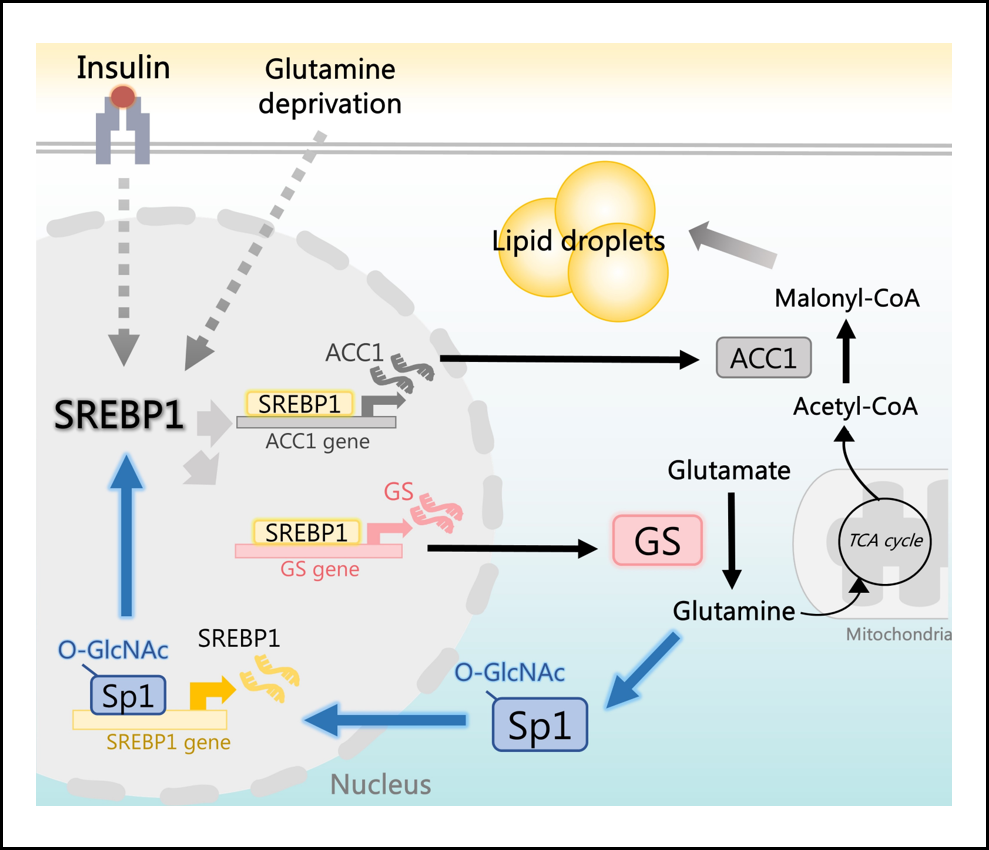
Metabolic reprogramming enables cancer cells to adapt to various intrinsic and extrinsic stresses, including nutrient deprivation, oxidative stress, and chemotherapy, thereby promoting tumor growth, metastasis, and chemoresistance. Our laboratory is dedicated to elucidating the mechanisms underlying lipid and glutamine metabolic reprogramming in cancer cells. We further explore how epigenetic regulation, including DNA demethylation, and protein O-GlcNAcylation remodel cellular metabolic networks to drive tumor progression and therapeutic resistance. To address these questions, we integrate metabolomics, lipidomics, and molecular biology approaches to systematically investigate lipid metabolic reprogramming, lipid droplet formation and function, dynamic changes in lipid-associated metabolites, and the interplay between metabolic signaling and cell fate. We also seek to identify novel molecular biomarkers with diagnostic, prognostic, and therapeutic value. Our ultimate goal is to uncover the key metabolic pathways and molecular mechanisms that drive cancer cell growth, metastasis, and chemoresistance, ultimately facilitating the development of innovative metabolism-based therapeutic strategies and anticancer therapies. In addition to cancer research, we investigate the regulation of lipid and glutamine metabolism in hepatocytes and adipocytes to better understand the metabolic mechanisms underlying obesity, metabolic dysfunction-associated steatotic liver disease (MASLD), and other metabolic disorders. Through these studies, we aim to develop novel preventive and therapeutic strategies for metabolic diseases.
Research topics:
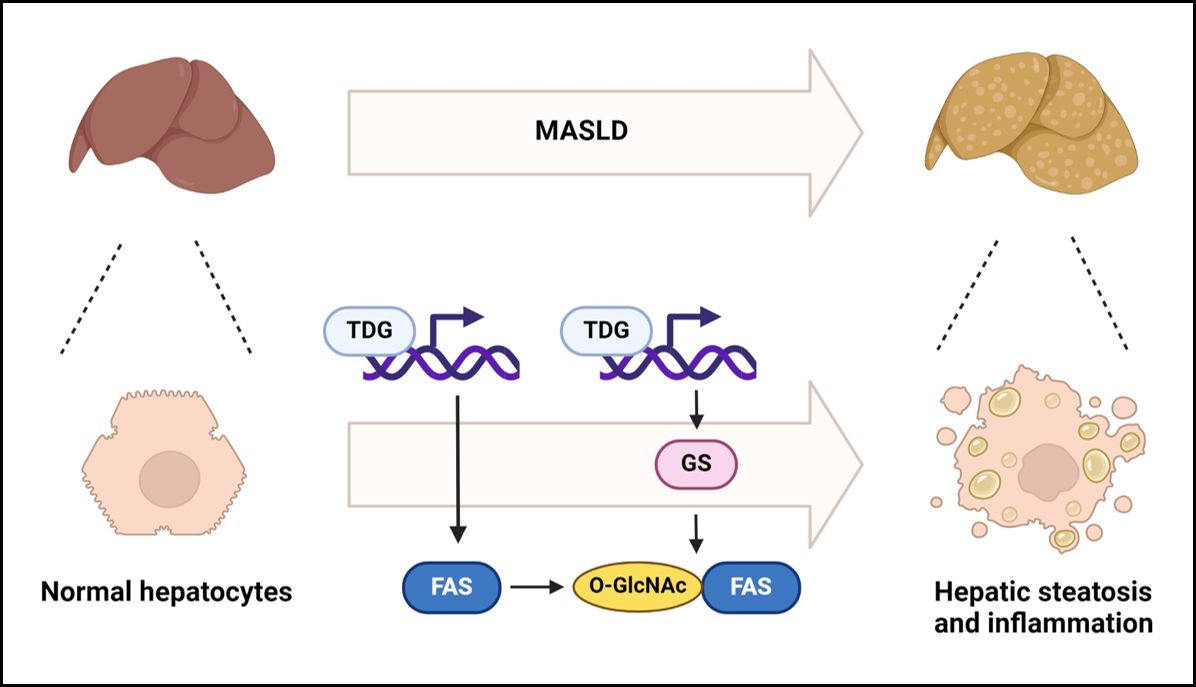
- To explore the roles of promoter demethylation and protein O-GlcNAcylation-mediated enhancement of fatty acid synthase (FAS) on hepatic steatosis and inflammation in metabolic dysfunction-associated steatotic liver disease (MASLD).
- To study the role of protein O-GlcNAcylation in the regulation of fatty acid translocase CD36 and lipid metabolic reprogramming that drives chemoresistance in hepatocellular carcinoma (HCC).
- To investigate how lipid droplet formation influences chemotherapeutic efficacy in colorectal cancer (CRC) and to elucidate the underlying metabolic regulatory mechanisms.
Education
| Ph.D. Degree | Graduate Program in Biochemistry and Molecular Biology, University of California, Riverside, CA, USA |
| Master Degree | Graduate Institute of Agricultural Chemistry, Microbiology Division, National Taiwan University, Taiwan |
| Bachelor’s Degree | Department of Agricultural Chemistry, National Taiwan University, Taiwan |
Experience
| 2020 Associate Professor | Department of Life Sciences, National Cheng Kung University, Taiwan |
| 2014 Assistant Professor | Department of Life Sciences, National Cheng Kung University, Taiwan |
| 2012 Postdoctoral Fellow | Department of Molecular Genetics and Microbiology, Stony Brook University, NY, USA |
| 2011 Postdoctoral Fellow | Division of Biomedical Sciences, University of California, Riverside, CA, USA |
Awards and Honors
Publications
-
- Zou-Han Lin, Pin-I Chou (co-first author), Jia-Wei Chang, Zong-Chen Lin, Yuan-Ting Sun, Ming-Hui Chang, Shih-En Huang, Yu-Min Yeh, and I-Chen Peng*. (2026 Apr) Promoter demethylation and protein O-GlcNAcylation-mediated enhancement of fatty acid synthase contributes to hepatic steatosis and inflammation in MASLD. The Journal of Nutritional Biochemistry. 150:110227. (* For correspondence)
- Yu-Tsen Hsieh, Tung-Hsuan Kang (co-first author), Hsin-Yi Hung, Yi-Han Chang, Kuan-Chen Cheng, Chia-Yih Wang, Wen-Tai Chiu, Pai-Sheng Chen, Shih-Chieh Lin, and I-Chen Peng*. (2025 Jul) Identification of a 2-phenoxychromone derivative as a novel inhibitor of lipid droplet formation in adipocytes and hepatocytes. Results in Chemistry. 16:102389. (* For correspondence)
-
Yu-Ying Chao, Ruei-Ci Lin, Ping‑Jui Su, Chu-An Wang, Ting-Yuan Tu, Ya-Chin Hou, Yi-Tzui Tsai, I-Chen Peng, Shaw-Jenq Tsai, Yan-Shen Shan, and Chia-Yih Wang. (2025 Jan) Melanophilin-induced primary cilia promote pancreatic cancer metastasis. Cell Death & Disease. 16(1):22.
- Yu-Ying Chao, Bu-Miin Huang, I-Chen Peng, Pei-Rong Lee, Yi-Shyun Lai, Wen-Tai Chiu, Yi-Syuan Lin, Shih-Chieh Lin, Jung-Hsuan Chang, Pai-Sheng Chen, Shaw-Jenq Tsai*, and Chia-Yih Wang*. (2022 Dec) ATM- and ATR-induced primary ciliogenesis promotes cisplatin resistance in pancreatic ductal adenocarcinoma. Journal of Cellular Physiology. 237(12):4487-4503.
- Jin-Wei Jhu, Jia-Bao Yan, Zou-Han Lin, Shih-Chieh Lin, and I-Chen Peng*. (2021 Sep). SREBP1-induced glutamine synthetase triggers a feedforward loop to upregulate SREBP1 through Sp1 O-GlcNAcylation and augments lipid droplet formation in cancer cells. International Journal of Molecular Sciences.22(18), 9814. (* for correspondence)
- Jia-Bao Yan, Chien-Cheng Lai, Jin-Wei Jhu,Brendan Gongol, Traci L. Marin, Shih-Chieh Lin, Hsiang-Yi Chiu, Chia-Jui Yen, Liang-Yi Wang, and I-Chen Peng*. (2020 Jun) Insulin and metformin control cell proliferation by regulating TDG-mediated DNA demethylation in liver and breast cancer cells. Molecular Therapy-Oncolytics. 18: 282-294. (* for correspondence)
- Pai-Sheng Chen, Wen-Tai Chiu, Pei-Ling Hsu, Shih-Chieh Lin, I-Chen Peng, Chia-Yih Wang , and Shaw-Jenq Tsai. (2020 May) Pathophysiological implications of hypoxia in human diseases. Journal of Biomedical Science. 27(1):63.
- I-Chen Peng*, Alex J. Bott, and Wei-Xing Zong*. (2016 Oct) Spectrophotometric determination of glutamine synthetase activity in cultured cells. Bio-protocol 6(19): e1959. (* for correspondence)
- Alex J. Bott*, I-Chen Peng* (co-first author), Yongjun Fan, Brandon Faubert, Lu Zhao, Jinyu Li, Sarah Neidler, Yu Sun, Nadia Jaber, Dawid Krokowski, Wenyun Lu, Ji-An Pan, Scott Powers, Joshua Rabinowitz, Maria Hatzoglou, Daniel J. Murphy, Russell Jones, Song Wu, Geoffrey Girnun, and Wei-Xing Zong. (2015 Dec) Oncogenic Myc induces expression of glutamine synthetase through promoter demethylation. Cell Metabolism. 22(6):1068-1077. (* contributed equally to this study)
- Yu-Ting Hung, Chi-Te Liu, I-Chen Peng, Chin Hsu, Roch-Chui Yu, Kuan-Chen Cheng. (2015 Sep) The implementation of a Hazard Analysis and Critical Control Point management system in a peanut butter ice cream plant. Journal of Food and Drug Analysis. 23(3):509-515.
- Brendan Gongol, Traci Marin, I-Chen Peng, Brian Woo, Stephanie King, Marcy Martin, Wei Sun, Shu Chien, and John Y-J. Shyy. (2013). AMPKa2 exerts its anti-inflammatory effects through PARP-1 and Bcl-6. Proc Natl Acad Sci U S A. 110(8):3161-3166.
- I-Chen Peng, Kai-Yin Lo, Chun-Hua Hsu, and Chia-Yin Lee. (2012). Increasing the storage and oxidation stabilities of N-acyl-D-amino acid amidohydrolase by site-directed mutagenesis of critical methionine residues. Process Biochemistry. 47:1785-1790.
- I-Chen Peng, Zhen Chen, Wei Sun, Ying-Shiuan Li, Traci LaNai Marin, Pang-Hung Hsu, Mei-I Su, Xiaopei Cui, Songqin Pan, Christian Y. Lytle, David A. Johnson, Frank Blaeser, Talal Chatila, and John Y-J. Shyy. (2012). Glucagon regulates ACC activity in adipocytes through the CaMKKb/AMPK pathway. Am J Physiol Endocrinol Metab. 302(12):E1560-1568.
- Zhen Chen, I-Chen Peng (co-first author), Xiaopei Cui, Yi-Shuan Li, Shu Chien, and John Y-J. Shyy. (2010). Shear stress, SIRT1, and vascular homeostasis. Proc Natl Acad Sci U S A. 107(22):10268-10273.
- Zhen Chen, I-Chen Peng, Wei Sun, Mei-I Su, Pang-Hung Hsu, Yi Fu, Yi Zhu, Kathryn DeFea, Songqin Pan, Ming-Daw Tsai, and John Y-J. Shyy. (2009). AMP-activated protein kinase functionally phosphorylates endothelial nitric oxide synthase Ser633. Circ Res. 104:496-505.